我们的优质产品

  • 规整填料
  • 随机包装
  • 塔内部结构
  • 其他的
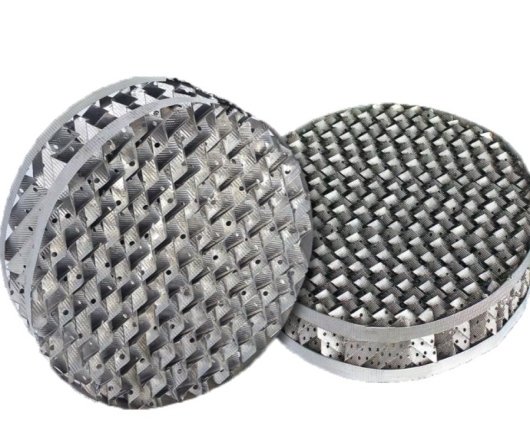
规整填料
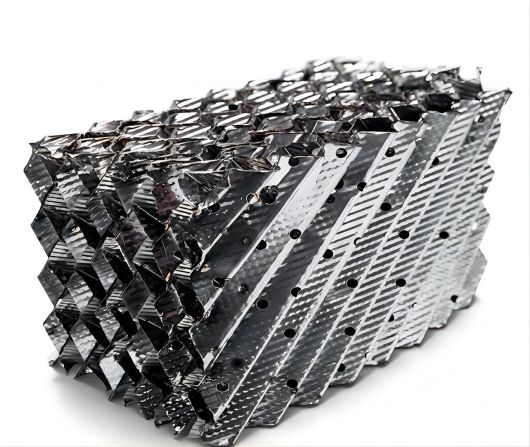
metal structured packing random packing
金属结构预制塔填料
规整填料 是一种在塔内按照均匀几何形状排列堆放的填料。整个塔断面几何形状规则、对称、均匀,规定了气液流路,减少了通道流和壁流现象。流量大,压降可以很小。在相同的能源成本和压降下,它可以比散装填料提供更大的比表面积,在相同的体积内实现更高的传质和传热效率。近几十年来, 规整填料 已广泛应用于精细化工、香料工业、炼油、化肥、石油化工等领域的众多塔器。规整填料 有两种不同的倾角可供选择,即。 X型和Y型。Y型填料与水平轴的倾斜角约为45°,应用最广泛。X型填料与水平轴的倾斜角为30°,用于大容量和高容量场合。低压降应用。
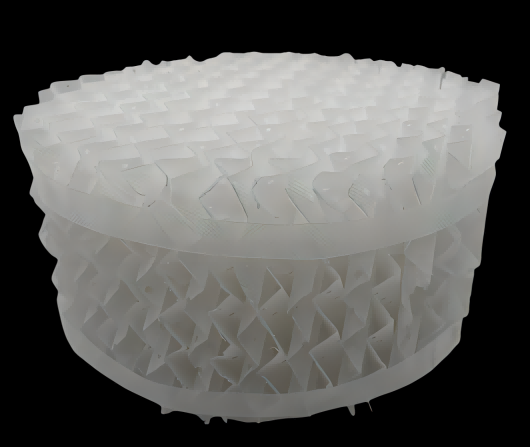
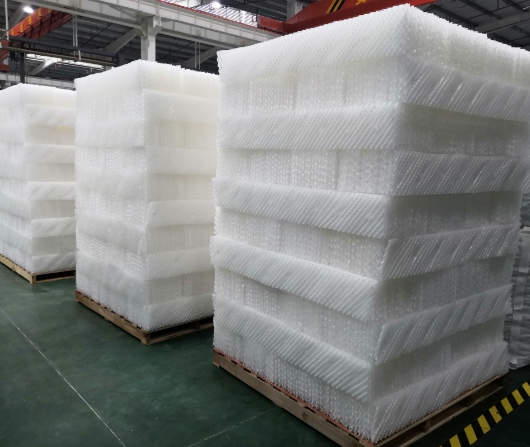
Plastic perforated structured packing
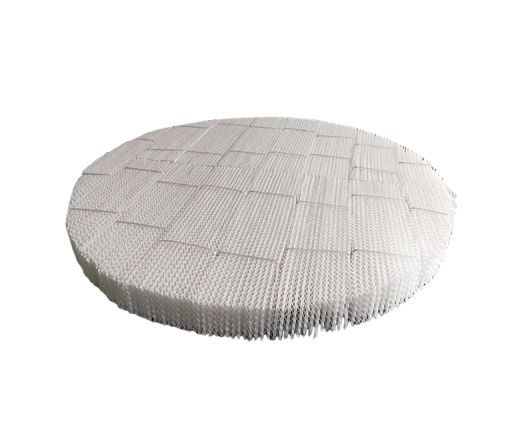
塑料波纹板填料塔填料
自Metal Mellapak被开发出来并被市场接受以来。科学家发现 金属波纹板填料 不适合任何介质的要求 (酸)。此外,其在工业领域的广泛应用也非常困难。在那之后, 塑料 波纹板填料 出生于。与金属波纹板组相比具有流量大、压降小、比表面积大等特点。 
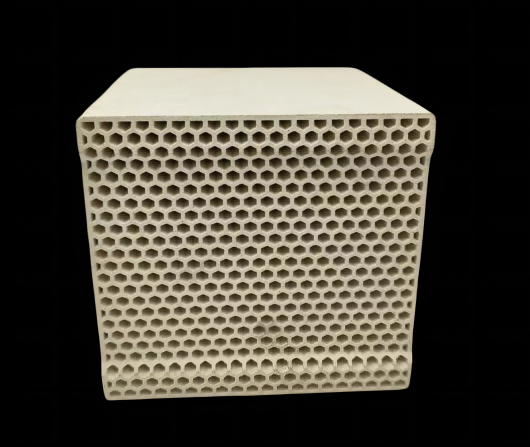
ceramic honeycomb high efficiency gas purification
蜂窝沸石分子筛高效废气净化
目前VOCs治理主要采用活性炭。由于活性炭无法在高温下进行分析,因此需要定期更换。然而,吸附有机物的活性炭是一种危险化学品,处理成本较高。这种环保吸附材料是疏水性分子筛,与普通分子筛不同的是,它优先吸附气体中的水。对有机物具有高度选择性的吸附能力,并可在高温下分解,从而实现连续吸附-再生。吸附材料通过特殊的制备工艺制成多孔结构。有机物吸附量大于2%,可长期吸附再生。 蜂窝分子筛adopt吸附系统,降低废气浓度和风量,同时配合催化燃烧技术,降低运行成本。  
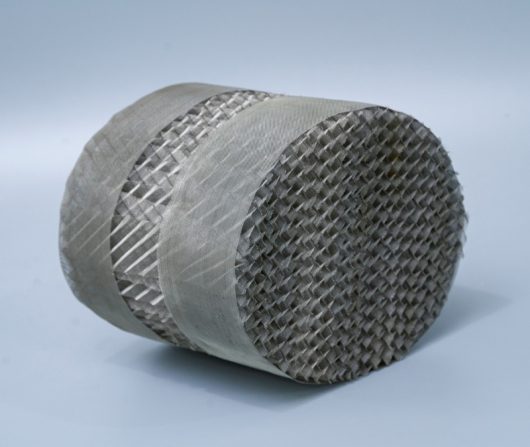
wire mesh structured packing
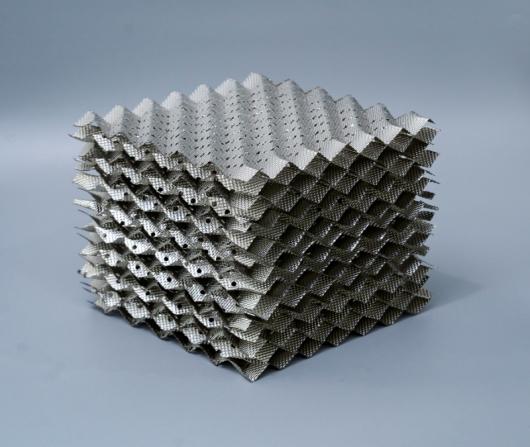
丝网规整填料塔填料
丝网规整填料 具有高比表面积。同时,由于其独特的毛细管效应 网。填料表面具有较好的润湿性。因此具有较高的分离效率。与其他类型的包装相比, 压降较低,持液量较小,特别适用于难分离、热敏性物料 系统。制作金属丝网填料的主要材料有不锈钢、铜、铝、铁、镍等。  
plastic structured packing
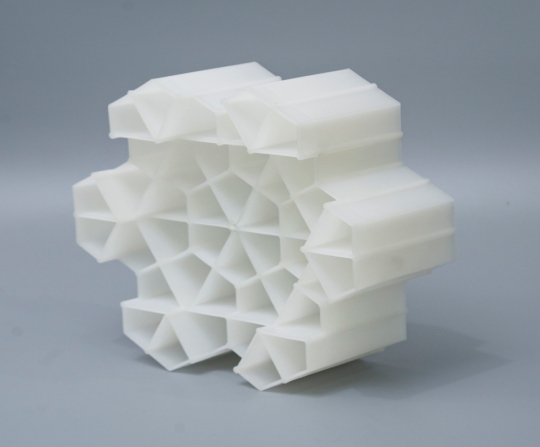
蜂窝状塑料支撑块
蜂窝状塑料支撑块 由合成塑料注射成型制成。公式可根据情况调整 以适应不同的工况条件,以达到最佳的效果。完全取代常用的轻质陶瓷填料 前。我公司研发的蜂窝状塑料支撑块可重复使用,比表面积大 通气量大,其功效是轻质瓷的两倍。尤其是在维护过程中, 轻质陶瓷包装成为固体废物,难以处理。但蜂窝状塑料支撑块可以 作为再生资源重复利用,环保节能。通过焦化的长期考验 脱硫塔。实践证明,蜂窝状塑料支撑块具有较强的抗堵塞能力和优异的性能。 分离纯化效果。        
pph perforated structured packing
PPH波纹板填料塔填料
自Metal Mellapak被开发出来并被市场接受以来。科学家发现 金属波纹板填料 不适合任何介质的要求 (酸)。此外,其在工业领域的广泛应用也非常困难。在那之后, 塑料 波纹板填料 诞生了。与金属波纹板组相比具有流量大、压降小、表面积大等特点。 
252Y structured packing manufacturers
规整填料用252Y型不锈钢开孔波纹板
几何结构将提供大的比表面积。丝网的毛细作用也增加了表面积的润湿性。灌装时,上下包装盘交叉90°,具有效率高、压力低、流量大的优点。用于减压蒸馏、常压蒸馏以及难分离或热敏性物质的吸收过程。  
copper structured packing column
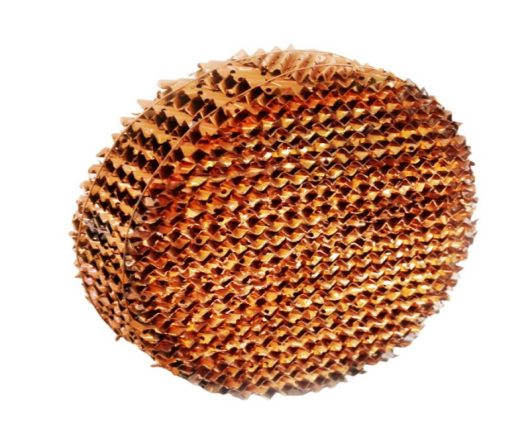
铜金属孔板波纹填料
它由穿孔压花金属或金属丝网的波纹片形成。其结果是一种非常开放的蜂窝结构,具有倾斜的流动通道,具有相对较高的表面积,但对气流的阻力非常低。选择表面增强功能以最大限度地提高液体扩散。这些特性往往在低压和低灌溉率应用中表现出显着的性能优势。金属规整填料通过不同的压接高度制造出多种尺寸。填料面积范围从 50 m²/m3(最低效率,最高容量)到 750 m²/m3(最高效率,最低容量)。
随机包装
metal tower packing
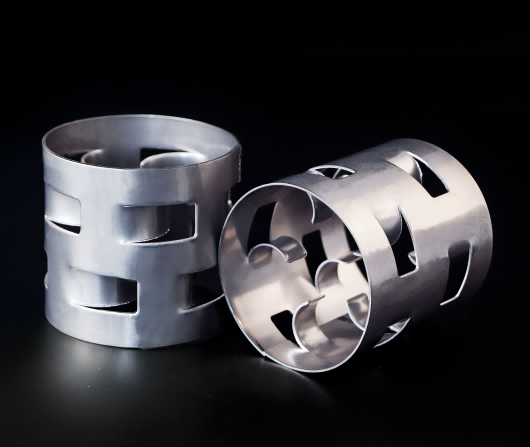
高性能金属散装金属鲍尔环
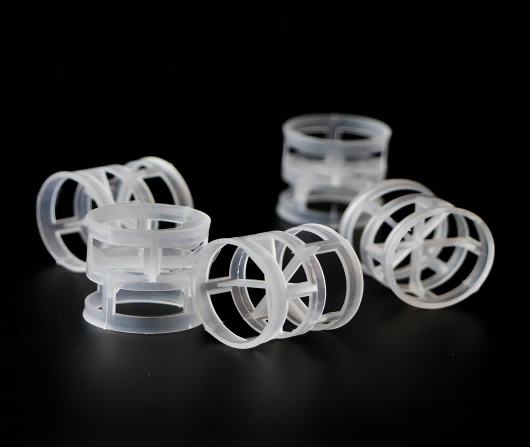
由德国巴斯夫发明,第一代散堆填料。到 与拉西环相比,最重要的改进是增加了两排 向内的叶舌。促进液气流动性,提高塔填料质量 传输性能。  
High performance ceramic pall ring
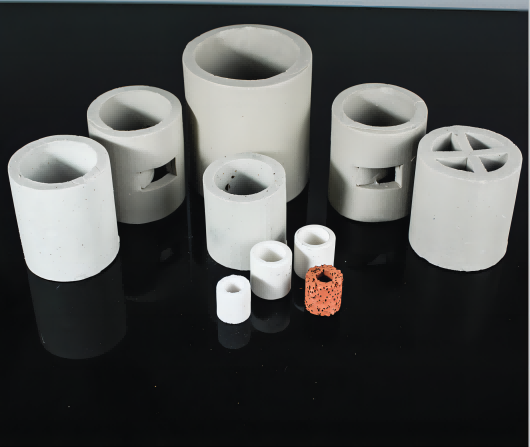
散堆陶瓷鲍尔环
由德国巴斯夫发明,第一代散堆填料。到 与拉西环相比,最重要的改进是增加了两排 向内的叶舌。促进液气流动性,提高塔填料质量 传输性能。  
metal cascade ring tower packing
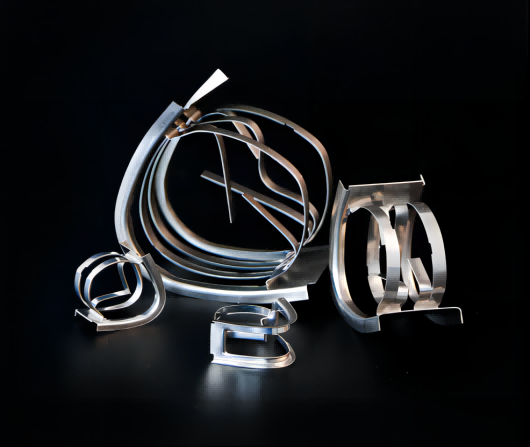
金属矩鞍环塔填料
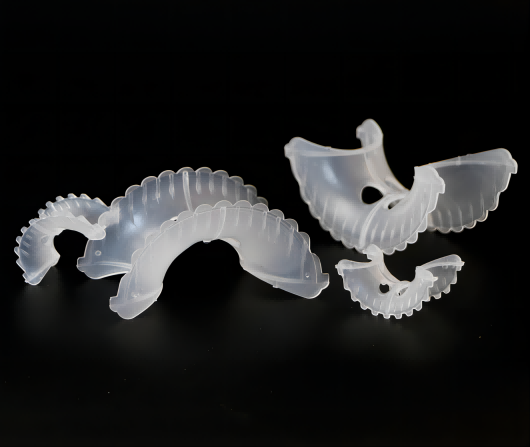
由于这款包的形状像马鞍,所以被称为 鞍环 或者 贝尔环。这 最早的鞍环的材料是陶瓷。在我们的实际应用中,当气体流动时 向上,液体沿弧形通道向下流动。这种运动方式将 直接减少壁流的发生。然而,拱形外部框架也会导致 重叠和桥接。因此,科学家将两端改为矩形 接触面。这一改进将减少桥接的发生。 
raschig ring
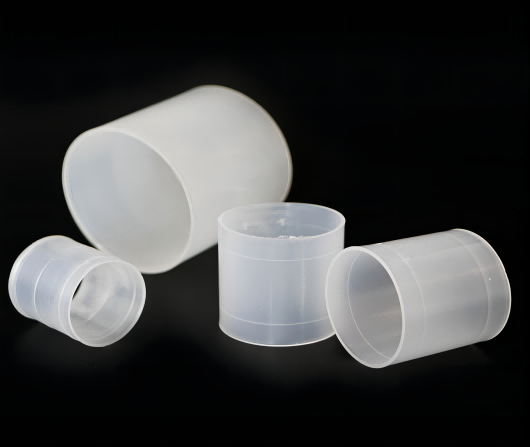
塑料拉西环塔填料
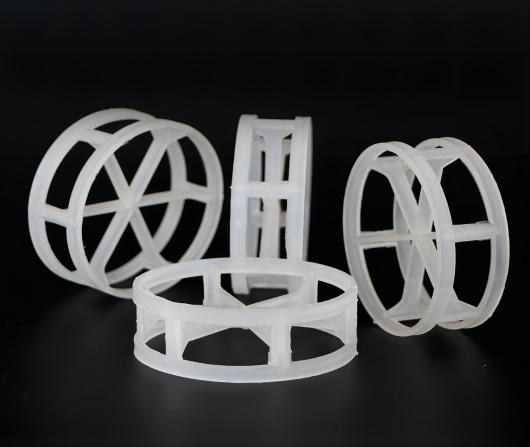
这是最早开发的 散装,其高度等于外部 直径。 拉西环 德国化学家弗里德里希·拉西 (Friedrich Raschig) 发明 1914年,也标志着填充HDS的发展进入了科学轨道。 但在实际应用中,如“壁流、通道流等” 经常发生在填充床上。 
plastic snowflake ring tower packing
塑料雪花散堆填料塔填料
塑料雪花环 是一个高效率的 塔填料因其形状而得名。它具有低比重、高 泛点、孔隙率大、质量高 传输单元高度。此外,这个随机 填料具有较低的压降,这 减少背压现象 最大限度地减少能源消耗 脱模工艺。塑料雪花环非常 经济适用于氯气 以及溴生产、空气分离和 水冷却过程。 
plastic flat ring
塑料扁环塔填料
扁环 也称为 SMR(超迷你戒指),这是一个先进的 散装 在 这 塔填料。其结构与级联迷你环类似,有 顶部和底部不翻边结构。可以提高包装强度 通过调整内刀片的弧度。流道结构合理,压力低确保下降和高传质性能。超迷你戒指主要有两种类型, 其名称为QH-1和QH-2。 
plastic super saddle ring tower packing
塑料超级鞍环塔填料
它是在矩矩环结构的基础上改进的一种环。最大的进步值得注意的是矩鞍座的弧形轮廓会变成波浪形或锯齿形。 同时,增加弧形液体通道的中间位置有一些小孔。这 结构的改变不仅增加了填料的接触间隙,而且改善了 气体和液体在填料层中的运动和分布
plastic ralu ring tower packing
塑料Ralu散堆填料塔填料
这是一种改进的鲍尔环。主要改进是增加周转率 和两端的壁厚。在不改变分离效率的情况下,床 高度可以降低。从而减少压力降..
塔内部结构
Knitted Wire Mesh Demister Wire Mesh Mist Eliminator
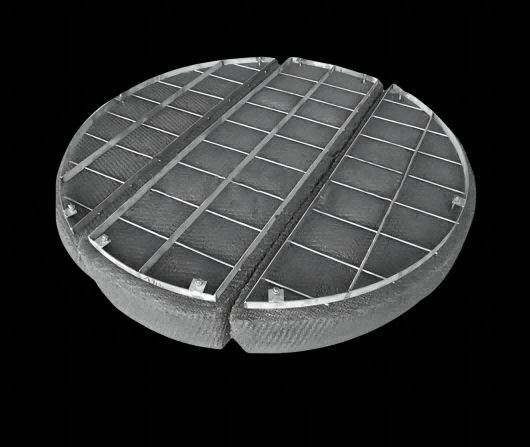
针织丝网除雾器 丝网除雾器
全系列除雾装置,包括网垫除雾器、叶片式除雾器 并提供用于分离夹带液体的液体聚结器。产品有多种金属、塑料和热塑性塑料可供选择,用途广泛。除雾器安装在填料塔顶部或与两个填料床之间的收集盘结合使用。他们 将液滴从气流中分离出来。从柱中排出的液滴和/或从一级到一级的液体夹带 下一个被最小化。我们的除雾器经过精心设计,可在特定应用下实现最佳性能。 
Support Grid Plate
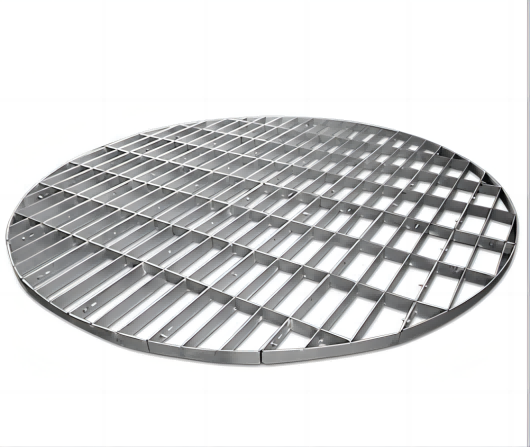
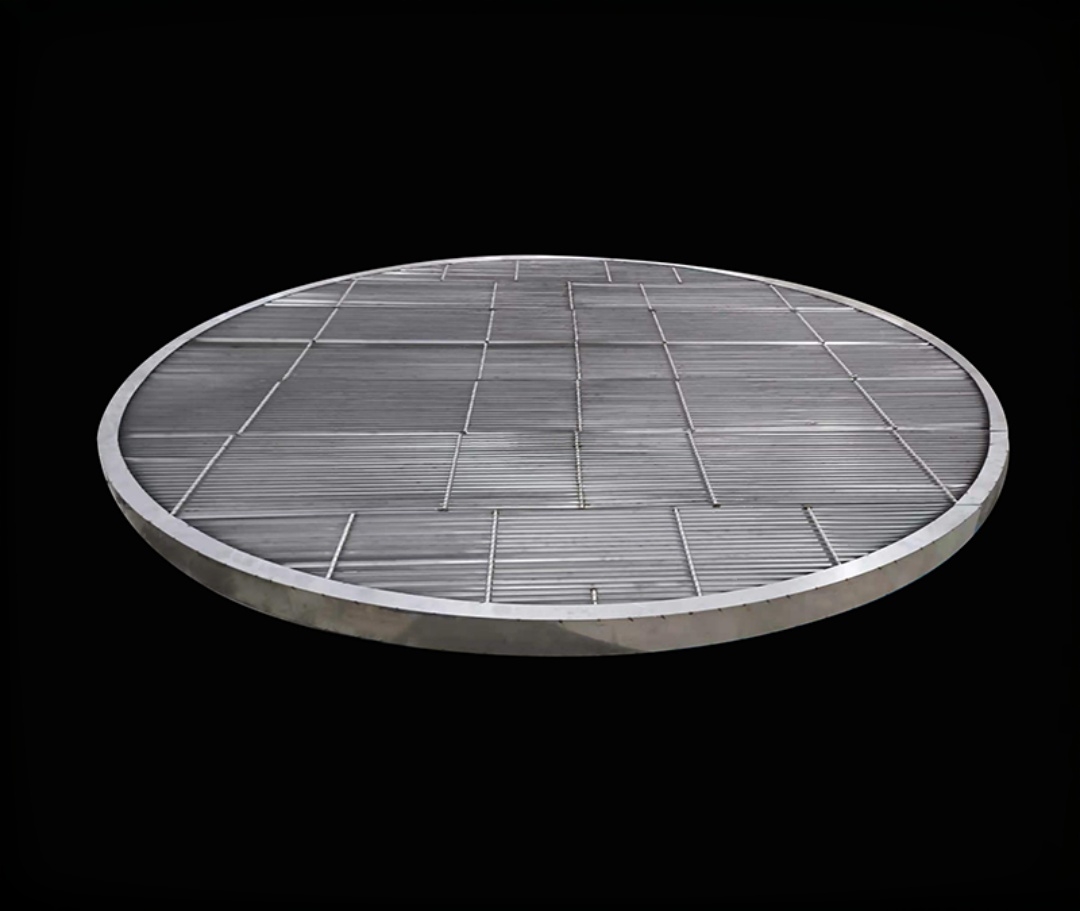
精馏塔散装填料支撑栅板
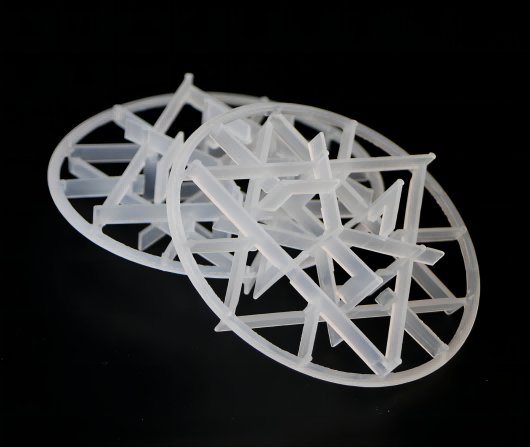
支撑网格板 必须以允许气体和液体在塔中尽可能不受限制地流动的方式构建。这在支撑栅格和填充床之间的区域尤其重要,存在因不合适的填充支撑而阻塞气流的危险。这些装置的主要作用是对塔填料床进行结构支撑。支持网格在结构化和随机打包过程中工作,具有多种用途。 
plastic bubble cap tray
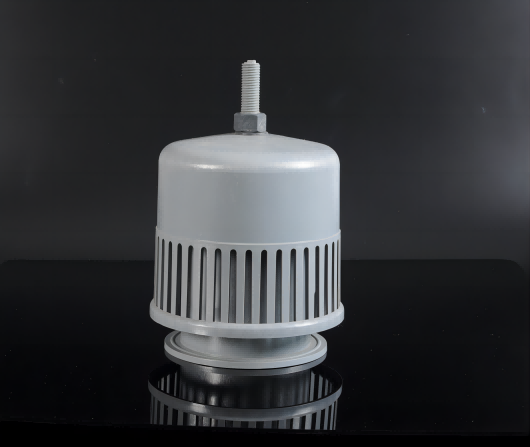
化工塑料泡罩
泡罩托盘 是一个扁平的穿孔板,在穿孔周围具有立管(如管道),并且在立管上具有倒杯形式的盖子。盖子通常配有槽或孔,蒸汽可通过槽或孔排出。安装盖子时,在立管和盖子之间留有空间,以允许蒸汽通过。蒸汽通过上升管上升,并被盖子引导向下穿过盖子上的槽,最后在托盘上的液体中鼓泡。由于蒸汽必须通过许多通道,这导致比其他传统塔盘更高的压降和更低的容量。液体和泡沫在塔盘上填充的深度至少等于堰高度或提升管高度,使泡罩塔盘具有用于反应应用的独特能力。   
metal bubble cap tray
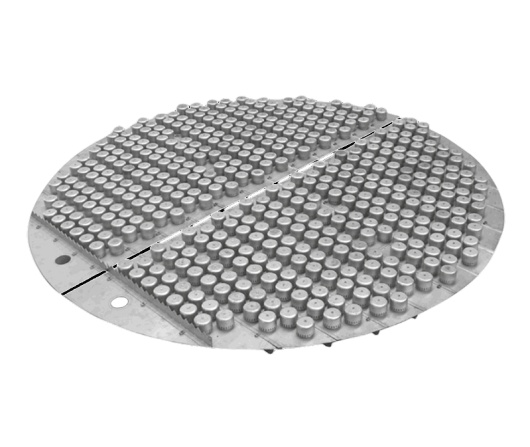
化工用金属泡罩托盘
泡罩塔盘主要用于液体负载极低且灵活性极高且需要大调节比的应用。 泡罩的每个孔上安装有立管或烟囱,以及覆盖立管的帽。安装盖子时,应在立管和盖子之间留出空间,以允许蒸汽通过。蒸气通过烟囱上升,并被盖子引导向下,最后通过盖子上的槽排出,最后通过托盘上的液体鼓泡。   
化工金属泡罩
化工金属泡罩
泡罩托盘 是一个扁平的穿孔板,在穿孔周围具有立管(如管道),并且在立管上具有倒杯形式的盖子。盖子通常配有槽或孔,蒸汽可通过槽或孔排出。安装盖子时,在立管和盖子之间留有空间,以允许蒸汽通过。蒸汽通过上升管上升,并被盖子引导向下穿过盖子上的槽,最后在托盘上的液体中鼓泡。由于蒸汽必须通过许多通道,这导致比其他传统塔盘更高的压降和更低的容量。液体和泡沫在塔盘上填充的深度至少等于堰高度或提升管高度,使泡罩塔盘具有用于反应应用的独特能力。   
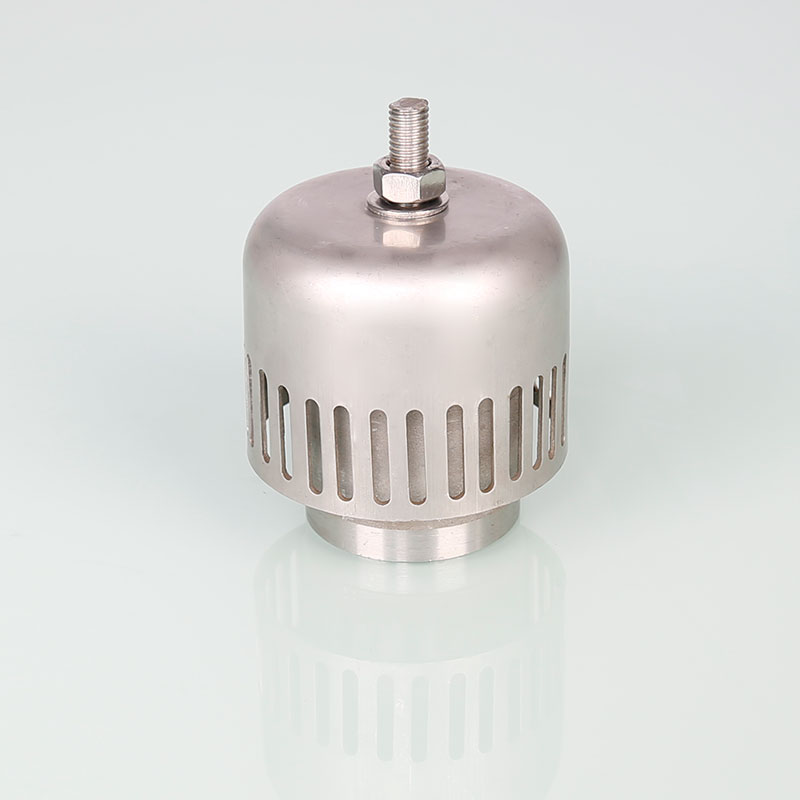
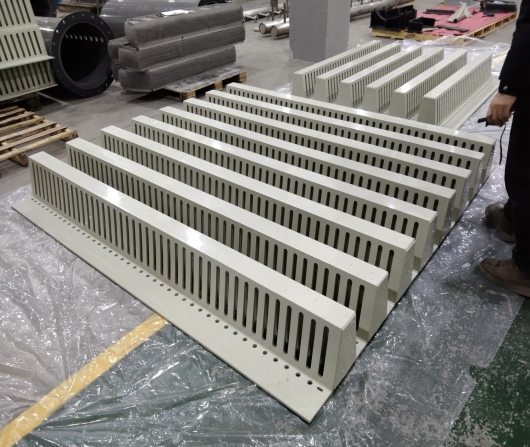
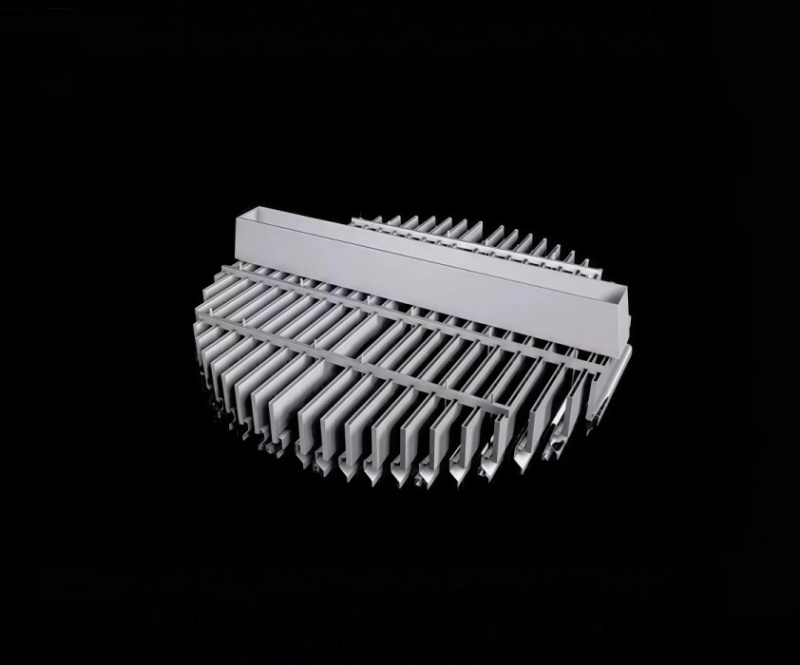
填料塔和填料柱的塑料驼峰支撑
填料塔和填料柱的塑料驼峰支撑
塑料 驼峰支撑 (也称为 填料支撑格栅 或者 床位限制器) 是 填料塔 和 蒸馏塔,旨在均匀分布重量并防止填料(例如鲍尔环、拉西环或结构填料)塌陷或堵塞塔的下部。塑料驼峰支撑的主要特点材料: 由...制成 PP(聚丙烯)、PVDF(聚偏氟乙烯)或 CPVC,因其耐化学性而被选中。设计: 波浪状(驼峰)或网格状结构,允许高 开放区域 (60-90%)最佳 流体流动.功能:支持 填料重量 以防止破损。确保 均匀的气体和液体分布.防止填料落入塔的下部。耐腐蚀性: 适合 酸性、碱性和有机化学品 环境。重量轻且易于安装: 在腐蚀条件下比金属支架更耐用。应用1. 化学和石化工业蒸馏、吸收和洗涤塔用于:硫酸、硝酸和盐酸工艺。气体处理(H₂S、CO₂ 去除)。制药和农用化学品行业的溶剂回收。2. 水和废水处理洗涤塔 用于移除 氨、氯和挥发性有机化合物.冷却塔 包装支持最大化 传热效率.3. 空气污染控制用于 烟气脱硫(FGD)系统 持有 随机填料.除臭洗涤器 针对工业排放。4.石油和天然气工业乙二醇脱水塔 (天然气加工)。胺脱硫装置 (去除 H₂S 和 CO₂)。
其他的
bio ball filter
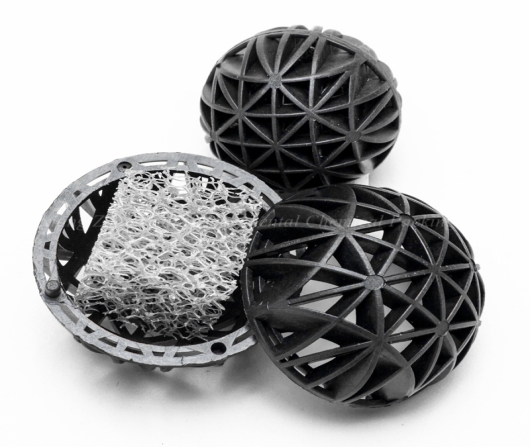
水处理用塑料生物球填料
它是由 Jaeger Tri 发明的。一般来说,表面积不大是Tri-pack的最大优势。肋条、支柱和滴水杆的独特形状赋予 Tri-Packs 塔填料优异的润湿特性,并能够在整个床层中保持均匀的液体分布。 在传统的传质理论中,我们常常认为大的表面积会提高传质效率。有时,过多的表面积会阻碍气体/液体接触并产生更高的压降。最终,会导致Packing的通道阻塞。基于这个新的认识,Jaeger发明了Tri-pack。 基本上,该填料通过填充床连续形成液滴来促进气体和洗涤液之间的最大表面接触。被公认为空提、脱气器和洗涤器的最佳填料    
MBBR packing for water treatment
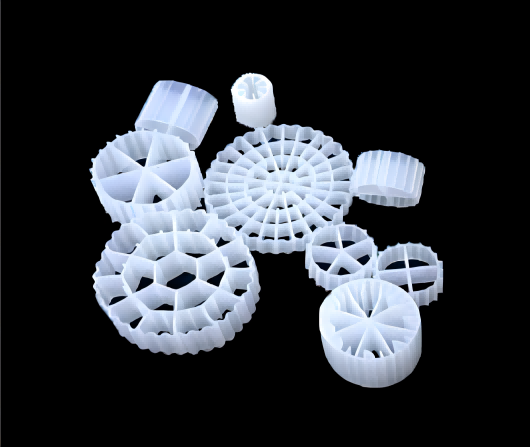
用于水处理的塑料 MBBR
它是一种废水处理工艺,由科技大学 Hallvard Degaard 教授于 20 世纪 80 年代末首次发明。MBBR 系统由一个曝气池(类似于活性污泥池)和带有特殊塑料载体的曝气池组成,提供生物膜可以生长的表面。载体由密度接近水密度(1g/cm3)的材料制成。一个例子是高密度聚乙烯 (HDPE),其密度接近 0.95 g/cm3。载体在池内通过曝气系统进行混合,从而使进水废水中的底物与载体上的生物质有良好的接触  
igel ball
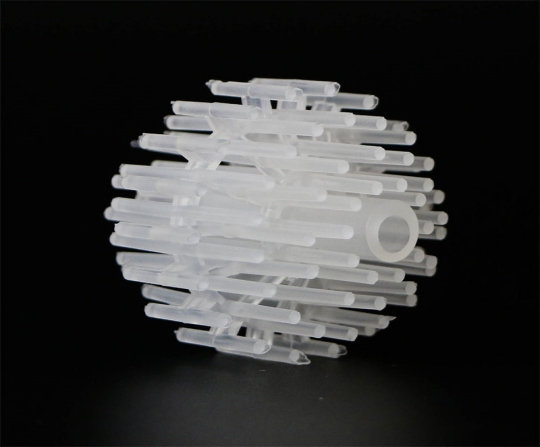
水处理用塑料伊格尔球
伊格尔球 是一种常见的生物滤料,主要以聚丙烯为原料,采用注塑工艺加工成带刺的多针塑料球。小圆柱体均匀分布在球内,增加了蒸气和液体的分布点,使其能充分分散蒸气和液体。      

欢迎来到富西诺

1998
公司 成立于
  • 600
    0+

    专业员工

  • 168
    0+

    合作国家

  • 24*7
    24*7

    热情在线服务

最新消息

消息
  • 032026-04
    Solving Five Major Separation Challenges: How Metal Structured Packing Unlocks Efficiency and Energy-Saving Potential for Your Chemical Plant
    Quick Summary:Facing challenges like high-purity separation requirements, massive energy consumption, equipment size constraints, corrosive media, and frequent process fluctuations? Traditional tower internals often fall short. This article directly addresses five core pain points in chemical plants, explaining how Metal Structured Packing, with its high theoretical stages, extremely low pressure drop, high capacity, excellent corrosion resistance, and wide operational flexibility, serves as a powerful tool for process upgrades and optimization. Ayrtter, based on extensive industry application experience, provides professional technical solutions to help you with precise selection, achieving a leap in separation efficiency and effective control of operational costs. "Our distillation column separation efficiency is always stuck at a bottleneck, product purity won't improve..." "Steam consumption is a bottomless pit, energy costs are suffocating..." "We want to expand capacity, but the plant footprint is fixed, a complete rebuild isn't realistic..." "Handling corrosive materials, the packing lifespan is short, maintenance costs are too high..." "With just a slight feed fluctuation, column operation becomes unstable, product quality is inconsistent..." These real voices from process engineers and production managers reveal common core challenges in chemical separation processes. When traditional trays or random dumped packing​ struggle to meet increasingly stringent efficiency and energy demands, Metal Structured Packing​ has emerged as a key technology for modern process industries to break through bottlenecks. This article focuses on five common engineering challenges, analyzing how metal structured packing provides systematic solutions Challenge One: How to Meet Stringent High-Purity Separation Requirements? In the production of fine chemicals, electronic chemicals, and pharmaceutical intermediates, product purity requirements are nearly苛刻, translating directly into extreme demands for the theoretical stage count​ and separation efficiency​ of tower internals. The solution from metal structured packing lies in its superior microstructure.​ Taking Ayrtter's AY-MSP350X​ model as an example, its regular corrugated channels create exceptionally uniform gas-liquid distribution, virtually eliminating maldistribution phenomena like "channeling" and "wall flow," allowing each theoretical stage to perform at its maximum potential. Compared to conventional random packing, metal structured packing can increase the theoretical stage count by over 30% at the same column height. This means: Either​ achieving higher product purity within the existing column height. Or​ significantly reducing column height to meet the same separation requirement, thereby lowering equipment investment and footprint. Challenge Two: How to Effectively Reduce Massive Separation Energy Consumption? Separation processes, especially distillation, are major "energy consumers" in chemical plants. The energy is primarily consumed in providing reboiler heat at the column bottom, and the column pressure drop is a key factor determining the reboiler temperature (and thus energy consumption). Metal structured packing is a natural "energy saver."​ Gas flows through its internal regular, smooth channels with minimal resistance. Data shows that at the same gas velocity, the pressure drop of metal structured packing is typically only 1/4 to 1/3 that of random packing. Lower pressure drop means:   For vacuum distillation, the bottom temperature can be reduced further, significantly lowering steam consumption and better protecting heat-sensitive materials. For atmospheric/pressure distillation, the low pressure drop allows operation at higher capacities or directly reduces overall reboiler energy consumption. In a refinery vacuum column retrofit case, switching to high-efficiency structured packing resulted in a 15-20% reduction in steam consumption​ with a very short payback period. Challenge Three: How to Achieve Capacity Expansion Within Limited Plant Space? Market opportunities are fleeting, but building new columns takes time and significant investment. How to tap the potential of existing equipment within the original framework is a practical challenge for many plants. The high capacity characteristic of metal structured packing makes this possible.​ Due to its excellent hydrodynamic performance, it can handle larger gas and liquid phase loads before reaching the flooding point. In actual capacity expansion revamps, by replacing with Ayrtter's high-capacity metal structured packing, it's often possible to achieve a 20%-40% increase in processing capacity without changing the column diameter. This is equivalent to gaining nearly the capacity of a new production line at the cost of an "internal column surgery," offering a very high return on investment. Challenge Four: How to Handle Corrosive Media and Harsh Process Environments? When processing acid gases, halides, or other corrosive systems, the long-term stable operation of equipment is a significant test. The advantage of metal structured packing lies in its diversity of materials and customizability. Ayrtter not only provides conventional 304, 316L stainless steel materials but can also supply packing manufactured from duplex steel, Hastelloy, or even titanium​ based on material characteristics. More importantly, we can apply special passivation treatments or functional coatings​ to the packing surface to further enhance its corrosion resistance, fouling resistance, or improve its wettability. This comprehensive protection from the "skeleton" to the "skin" ensures long service life and stable performance in harsh environments. Challenge Five: How to Adapt to Frequent Feed Fluctuations and Flexible Production? Modern plants often need to switch product grades or handle feedstocks with fluctuating compositions, requiring separation columns to have good operational flexibility. Metal structured packing maintains high separation efficiency over a wide range of operating loads.​ Compared to trays, it lacks distinct "weeping" or "entrainment"拐点; compared to some random packing, its efficiency decline curve with load is gentler. This means that when feed rate or composition varies within a certain range, metal structured packing can still ensure stable product quality, providing reliable support for flexible plant operations. Scientific Selection: From "Usable" to "Optimal" Recognizing the advantages of metal structured packing is only the first step. Achieving the leap from "usable" to "optimal" hinges on scientific selection. This requires comprehensive consideration of: Process Objectives: Is the goal ultimate purity (choose higher specific surface area models like 500Y), or maximum processing capacity (choose high-capacity models like 125Y/250Y)? Physical Properties: The corrosiveness, foaming tendency, and cleanliness of the material determine the choice of material and surface treatment. Operating Conditions: Vacuum, atmospheric, or high-pressure operation, continuous or batch production, all influence the final design. Ayrtter's technical team can provide professional process simulation support​ and customized design​ to ensure the selected packing perfectly matches your process flow, unlocking maximum value.   SEO TDK Suggestions Title (60 chars): Solve 5 Separation Challenges: Metal Structured Packing Efficiency Guide - Ayrtter Meta Description (280 chars): Struggling with low purity, high energy use, or capacity limits? Ayrtter explains how Metal Structured Packing solves 5 core chemical separation pain points. Get high efficiency, low pressure drop, corrosion-resistant solutions. Download our selection guide. Article Tags: Metal Structured Packing, Separation Efficiency, Distillation Energy Saving, Chemical Packing Selection, High Pressure Drop Solution, Corrosion Resistant Packing, Column Capacity Expansion, Process Optimization, Mass Transfer Equipment, Ayrtter Solutions   Structured Data (FAQPage Schema) Expert Commentary & Analysis:Currently, the application of metal structured packing has moved from单纯的 "performance replacement" into a new phase of "process empowerment." Its value is no longer confined to the column interior but is deeply integrated with the plant's overall energy efficiency management, flexible production, and carbon reduction goals. Under the "Dual Carbon" goals, the reliance of absorption/stripping columns in CCUS​ projects on high-capacity, low-pressure-drop​ packing is clear evidence. However, product performance in the market varies, and the real gap lies in the deep understanding of the process and precise engineering conversion capability. Ayrtter's practical experience shows that a successful project begins with accurately dissecting the client's pain points and succeeds through the deep integration of Computational Fluid Dynamics analysis, materials science, and manufacturing processes. In the future, suppliers capable of providing integrated solutions from simulation, custom production to performance guarantee​ will play a central role in driving the industry's efficiency revolution.
    阅读更多
  • 282026-03
    Case Study: Solving Chronic Tower Downtime & High Energy Costs in a Sulfuric Acid Plant with Ceramic Super Saddle Rings
    Quick Summary:A major sulfuric acid producer in China faced persistent operational challenges: excessive pressure drop in drying/absorption towers and frequent, costly shutdowns due to packing degradation. After retrofitting with Ayrtter's Ceramic Super Saddle Rings, the plant achieved a ~55% reduction in system pressure drop, extended packing service life beyond 5 years, and significantly lowered energy consumption. This data-driven case study details the problem, solution, and verified results.   The Operational Challenge: Efficiency Loss in a Corrosive Environment A large-scale sulfuric acid production facility in Eastern China, with an annual capacity exceeding 500,000 tons, was grappling with chronic inefficiencies in its core process units: the drying and absorption towers. The traditional ceramic random packing inside these towers was failing to perform reliably under the severe conditions of high-temperature, concentrated sulfuric acid. The plant's engineering team was besieged by three interconnected problems: Unsustainable Energy Costs:​ The existing packing created high flow resistance, leading to excessive system pressure drop. This forced the plant's large blower and fan systems to operate at higher power draws, resulting in steep and rising electricity costs. The Cycle of Unplanned Downtime:​ Subjected to corrosive attack and thermal stress, the conventional packing deteriorated rapidly, suffering from breakage and fines generation. This caused channeling, further increased pressure drop, and ultimately necessitated a full packing replacement every 2-3 years. Each unplanned shutdown meant significant production loss and high maintenance costs. Unpredictable Performance:​ As the packing degraded, the tower's separation efficiency became unstable. This volatility threatened consistent product quality and prevented the plant from operating safely at its designed, optimal capacity. Finding a packing solution that could withstand the extreme environment while fundamentally improving hydraulic performance was critical. Options like Metal Pall Rings​ were unsuitable due to corrosion, and plastic materials could not handle the operating temperatures. The Engineered Solution: A Data-Backed Decision for Ceramic Super Saddle Rings Following a comprehensive technical review, the plant partnered with Ayrtter. The analysis conclusively identified Ceramic Super Saddle Rings​ as the optimal solution, based on three decisive advantages perfectly aligned with the application's demands: Designed for Hydraulic Superiority:​ The unique saddle shape with internal arches and a textured surface prevents nesting and creates a bed with a high void fraction. This geometry is engineered to minimize gas flow resistance, directly targeting the root cause of high energy consumption. Built for Severe-Service Longevity:​ Manufactured from a high-alumina ceramic formulation, these rings offer >99.6% resistance to sulfuric acid​ and excellent thermal shock resistance. This material integrity promised the durability needed to break the costly cycle of frequent packing replacement. Validated by Proven Performance:​ Ayrtter​ provided documented case histories and performance data from similar sulfuric acid applications, giving the client confidence that the theoretical benefits would translate into tangible, real-world results. Implementation: A Measured, Pilot Retrofit Approach The plant adopted a cautious, data-focused strategy. One critical drying tower was selected for a pilot retrofit. During a scheduled maintenance outage, the old ceramic packing was replaced with Ayrtter 50mm Ceramic Super Saddle Rings. After recommissioning, the team meticulously monitored key performance indicators for over 12 months. The collected operational data, summarized in the table below, provided clear and compelling evidence of the solution's effectiveness. A Clear Comparison: Documented Performance Metrics Performance Metric Before Retrofit (Legacy Ceramic Packing) After Retrofit (Ayrtter Ceramic Super Saddle Rings) Result Achieved Average System Pressure Drop ~2,800 Pa ~1,260 Pa ~55% Reduction Projected Packing Service Life 24-36 months >60 months(and counting) >100% Increase Potential Tower Throughput Capacity Design Baseline Up to 115% of baseline Up to 15% Increase Operational Stability Declined over time, required close monitoring Stable, predictable performance profile Significantly Enhanced Reliability The Engineering Rationale Behind the Success The outstanding results were a direct consequence of the Ceramic Super Saddle Ring's design directly addressing the failure modes of the previous packing. Solving the Pressure Drop Problem:​ The open, high-void-fraction bed structure​ was crucial. By providing a less restrictive path for process gas, it directly translated into lower energy consumption. The ~55% pressure drop reduction​ allowed the blower to operate at a significantly lower power draw for the same gas flow. Ending the Degradation Cycle:​ The high-alumina ceramic​ used by Ayrtter​ is fired at extreme temperatures, creating a dense, glass-like surface that is virtually impervious to concentrated sulfuric acid. This solved the core issues of corrosion, erosion, and structural failure that previously dictated the short packing lifespan. Unlocking Process Potential:​ The superior geometry not only reduces pressure drop but also enhances liquid distribution and gas-liquid interfacial renewal. This improves mass transfer efficiency in the drying and absorption processes, contributing to more stable operation and the potential for increased throughput. Broader Impact: Benefits Beyond the Metrics Beyond the quantifiable KPIs, the retrofit delivered significant strategic advantages: Predictable Maintenance Scheduling:​ With extended packing life and stable performance, the plant can now schedule maintenance outages years in advance, optimizing production planning and resource allocation. Reduced Operational Risk:​ The elimination of unexpected performance decay or sudden pressure surges has made the production line safer and more controllable. Clear & Compelling ROI:​ The combination of energy savings, avoided production losses from downtime, and extended asset life delivered a rapid and unambiguous return on investment, building a strong case for retrofitting other towers in the plant. Expert Commentary & Analysis:This case study validates a core principle for capital-intensive, severe-service industries: operational reliability is the primary driver of total cost of ownership (TCO).​ While the client's initial focus was on reducing energy costs (addressed by the 55% lower ΔP), the switch to high-performance Ayrtter Ceramic Super Saddle Rings​ delivered systemic TCO benefits: capital preservation (doubled service life), risk mitigation (eliminated unplanned stops), and latent capacity (increased throughput potential). In processes like sulfuric acid production, where the operating environment is fixed, the choice of internal components is the largest variable affecting plant economics. This project demonstrates that specifying advanced, application-engineered materials is not merely a procurement decision, but a strategic investment in plant throughput, efficiency, and long-term asset value. Could Your Operation Achieve Similar Results? If your processes involve corrosive media, high temperatures, or if you are combating rising energy costs and unplanned maintenance cycles, the solution detailed here may be directly applicable. Your Next Step with Ayrtter Request a Technical Assessment:​ Submit your tower specifications and process conditions to Ayrtter's engineering team​ for a confidential feasibility and benefit analysis. Review Product Specifications:​ Access detailed technical data sheets and material certification reports for Ayrtter's Ceramic Super Saddle Rings​ in our product documentation center. Discuss a Pilot Project:​ Contact us to explore structuring a controlled, low-risk retrofit in a single tower to validate performance gains with your own data. SEO & Publishing Data 1. SEO TDK Title:​ Ceramic Super Saddle Ring Case Study: Sulfuric Acid Plant Saves Energy | Ayrtter Meta Description:​ Real-world case study: A China sulfuric acid plant used Ayrtter's Ceramic Super Saddle Rings to cut energy costs by 55% & extend packing life. Data from a leading supplier & manufacturer. 2. Tags Ceramic Super Saddle Ring, Case Study, Sulfuric Acid Plant, Tower Packing, Corrosion Resistant Packing, Energy Saving, China Packing Manufacturer, Random Packing, Absorption Tower, Ayrtter 3. Structured Data (FAQPage Schema) { "@context": "https://schema.org ", "@type": "FAQPage", "mainEntity": [ { "@type": "Question", "name": "What was the main problem faced by the sulfuric acid plant before the retrofit?", "acceptedAnswer": { "@type": "Answer", "text": "The plant struggled with chronically high pressure drop in its drying/absorption towers, leading to excessive energy consumption. The existing ceramic packing also degraded quickly in the hot, concentrated acid, causing unplanned shutdowns for replacement every 2-3 years." } }, { "@type": "Question", "name": "What measurable results were achieved after installing Ayrtter's Ceramic Super Saddle Rings?", "acceptedAnswer": { "@type": "Answer", "text": "The retrofit delivered a approximately 55% reduction in system pressure drop, dramatically lowering energy costs. The packing's service life extended beyond 5 years, eliminating frequent downtime. The tower also demonstrated potential for increased throughput, and operational stability improved significantly." } }, { "@type": "Question", "name": "Why are Ceramic Super Saddle Rings particularly effective for sulfuric acid service?", "acceptedAnswer": { "@type": "Answer", "text": "Their unique open saddle geometry creates a high-void bed for low pressure drop and efficient mass transfer. Manufactured from high-alumina ceramic, they offer superior corrosion resistance (>99.6%) and thermal stability, making them exceptionally durable in concentrated sulfuric acid at high temperatures." } }, { "@type": "Question", "name": "Can Ayrtter provide a similar technical analysis for our application?", "acceptedAnswer": { "@type": "Answer", "text": "Yes. Ayrtter's engineering team can review your specific process parameters and tower data to provide a tailored analysis and projected performance benefits for a retrofit using our high-performance Ceramic Super Saddle Rings or other packing solutions." } } ] }
    阅读更多
  • 092025-09
    新疆石油和化学工业博览会圆满闭幕。
    9月4日至6日,2025新疆石油和化学工业博览会在新疆国际会展中心圆满落幕。万泽时代作为“数字碳中和”产品及解决方案提供商,在展会上全面展示核心技术矩阵,搭建起双碳目标与产业实践的桥梁。本届博览会以“强化化工产业链,培育优质新生产力”为主题,聚焦石化行业绿色升级与数字化转型,汇聚400余家展商,其中包括26家世界500强企业,展览面积达3万平方米,吸引了来自30多个国家和地区的企业参展。展会期间,公司代表与来自新疆及全国各地的石化企业、行业专家进行了深入交流,共同探讨如何通过数字化手段解决行业痛点。
    阅读更多

留言

留言
如果您对我们的产品感兴趣并想了解更多详情,请在此留言,我们会尽快回复您。
提交

主页

产品

whatsApp

接触